How to Stop Jealousy in a Relationship: 10 Tips That Work
Feeling jealous is human. Staying trapped in it isn’t.

Jealousy has a way of showing up uninvited. A tight feeling in the chest when a partner’s phone lights up, a spiral of questions after a night out with friends, a comment that comes out sharper than intended.
It rarely announces itself as jealousy in the moment. It shows up disguised as concern, as a joke, as a simple question. And it’s only afterward, in the quiet, that its real shape becomes clear.
Anyone searching for how to stop jealousy in a relationship is usually not dealing with a character flaw. Jealousy is one of the most common, most human emotions in romantic life, and almost everyone experiences some version of it at some point.
In this guide, you’ll learn practical tips on how to stop being jealous in a relationship, so you can actually enjoy love, show trust, and have peace.
Why Jealousy Shows Up in the First Place
Jealousy is rarely about the partner at all, even when it feels entirely focused on them. Underneath the surface, it’s almost always pointing at one of a few deeper sources:
Attachment history. Individuals with anxious attachment styles tend to experience jealousy more intensely and more frequently, largely because early relationships taught the nervous system to expect instability or abandonment.
READ: How to Practice the Law of Detachment in a Relationship
Past betrayal. A previous relationship involving infidelity or dishonesty can leave a kind of emotional residue that gets projected onto a completely different, entirely faithful partner.
Low self-worth. Jealousy often thrives in the gap between how someone sees themselves and how they imagine their partner sees them — the fear isn’t really “they’ll leave,” it’s closer to “I’m not enough to keep them.”
Genuine incompatible values or boundaries. Occasionally, jealousy is a reasonable response to a partner’s actual behavior — flirtation, secrecy, or blurred boundaries with others — rather than an internal insecurity.
Telling these apart matters enormously, because the solution for insecurity-driven jealousy looks completely different from the solution for jealousy rooted in an actual boundary violation. Most of the strategies below assume the former, since that’s the more common source — but it’s worth being honest about which category applies before assuming the work is entirely internal.
10 Tips to Overcome Jealousy in a Relationship
Want to stop being jealous in your relationship? Here are 10 practical tips on how to overcome it.
1. Name the Feeling Before Reacting to It
Jealousy tends to trigger a reaction before it’s even been consciously identified — a sharp comment, a passive-aggressive silence, an urge to check a phone.
Pausing long enough to silently name it (“this is jealousy, not danger”) creates just enough space between the feeling and the behavior to respond thoughtfully instead of impulsively.
2. Get Curious About the Actual Fear
Jealousy is rarely just “jealousy.” It’s usually a stand-in for a more specific fear: fear of being replaced, fear of not being enough, fear of losing control over an uncertain situation.
Asking directly, “what am I actually afraid of right now?” often reveals something far more workable than the jealousy itself, and far easier to address honestly with a partner.
3. Separate the Story from the Facts
A partner responding to a text a little slower than usual can spiral into an entire imagined narrative within seconds.
Slowing down enough to separate the observable fact (“they replied later than usual”) from the story attached to it (“they must be losing interest”) is one of the most reliable tools for reducing jealousy’s intensity in the moment.
4. Communicate the Feeling, Not the Accusation
There’s a significant difference between “why were you talking to them for so long” and “seeing that made me feel a little insecure — can we talk about it?”
The first invites defensiveness; the second invites connection.
Framing jealousy as a vulnerable feeling rather than an accusation tends to produce far more productive conversations, and it models the kind of honesty that makes a relationship feel safer over time.
5. Build Self-Worth Outside the Relationship
Jealousy often shrinks in proportion to how solid someone feels on their own. Friendships, hobbies, personal goals, and a sense of identity outside the relationship all reduce the pressure placed on a partner to be the sole source of security and self-esteem.
This isn’t about needing the relationship less. It’s about needing it in a healthier, less desperate way.
guides to help you build your self-worth
6. Challenge the Comparison Trap
Social media has made this particular struggle worse for almost everyone.
Comparing a partner’s interactions with others, or comparing a relationship to curated glimpses of someone else’s, tends to manufacture insecurity that has very little to do with reality.
Limiting exposure to these comparisons — and reminding oneself how selectively edited most of what’s seen online really is — can meaningfully reduce jealousy’s fuel supply.
7. Set Boundaries Instead of Control
There’s an important distinction between a boundary and control.
A boundary sounds like: “It would mean a lot if late-night messages with an ex stopped.” Control sounds like: “Give me your phone so I can check.”
The first respects a partner’s autonomy while protecting the relationship; the second tends to erode trust from both directions, regardless of how justified the initial jealousy felt.
8. Address Attachment Wounds Directly
For jealousy rooted in anxious attachment or past betrayal, general coping strategies only go so far.
orking with a therapist — particularly one experienced in attachment-based or trauma-informed approaches — can help address the root cause rather than just managing the symptoms indefinitely.
This is often the difference between temporarily calming jealousy and actually resolving it long-term.
9. Talk to the Relationship, Not Just the Feeling
Chronic jealousy sometimes signals that the relationship itself needs more transparency, reassurance, or clearly defined boundaries. Not because a partner has done anything wrong, but because every relationship benefits from explicit conversations about trust rather than assuming it’s understood.
A brief, regular check-in about how connected both partners feel can prevent jealousy from building up silently in the background.
10. Know When Jealousy Reflects a Real Problem
Occasionally, jealousy that feels unmanageable is actually an accurate response to genuine boundary violations — persistent secrecy, repeated dishonesty, or behavior that would reasonably concern most people.
In these cases, the work isn’t internal self-regulation. It’s a direct conversation about the specific behavior, and possibly outside support to determine what changes are realistically needed.
For a closer look at recognizing that distinction, the following guides can help separate insecurity-driven jealousy from jealousy rooted in real evidence.
What Progress Actually Looks Like
Learning how to stop jealousy in a relationship rarely means the feeling disappears completely. More realistically, progress looks like:
- Noticing the feeling earlier, before it turns into a reaction
- Talking about it honestly instead of acting it out indirectly
- Trusting a partner’s word more than an imagined worst-case scenario
- Feeling steadier as an individual, regardless of what the relationship is doing at any given moment
Jealousy, at its core, is often a very old fear wearing a very current disguise. Meeting it with curiosity rather than shame — and addressing it as a shared challenge rather than a private flaw — tends to do far more for a relationship than trying to suppress it ever could.
Working through jealousy often gets easier with a little structure — a way to turn the swirl of feelings into an honest, shared conversation instead of a silent spiral. The kind that makes it easier to talk through insecurity, jealousy, and everything in between before it turns into distance. That’s exactly what the Couple’s Journal Notebook below is designed for.
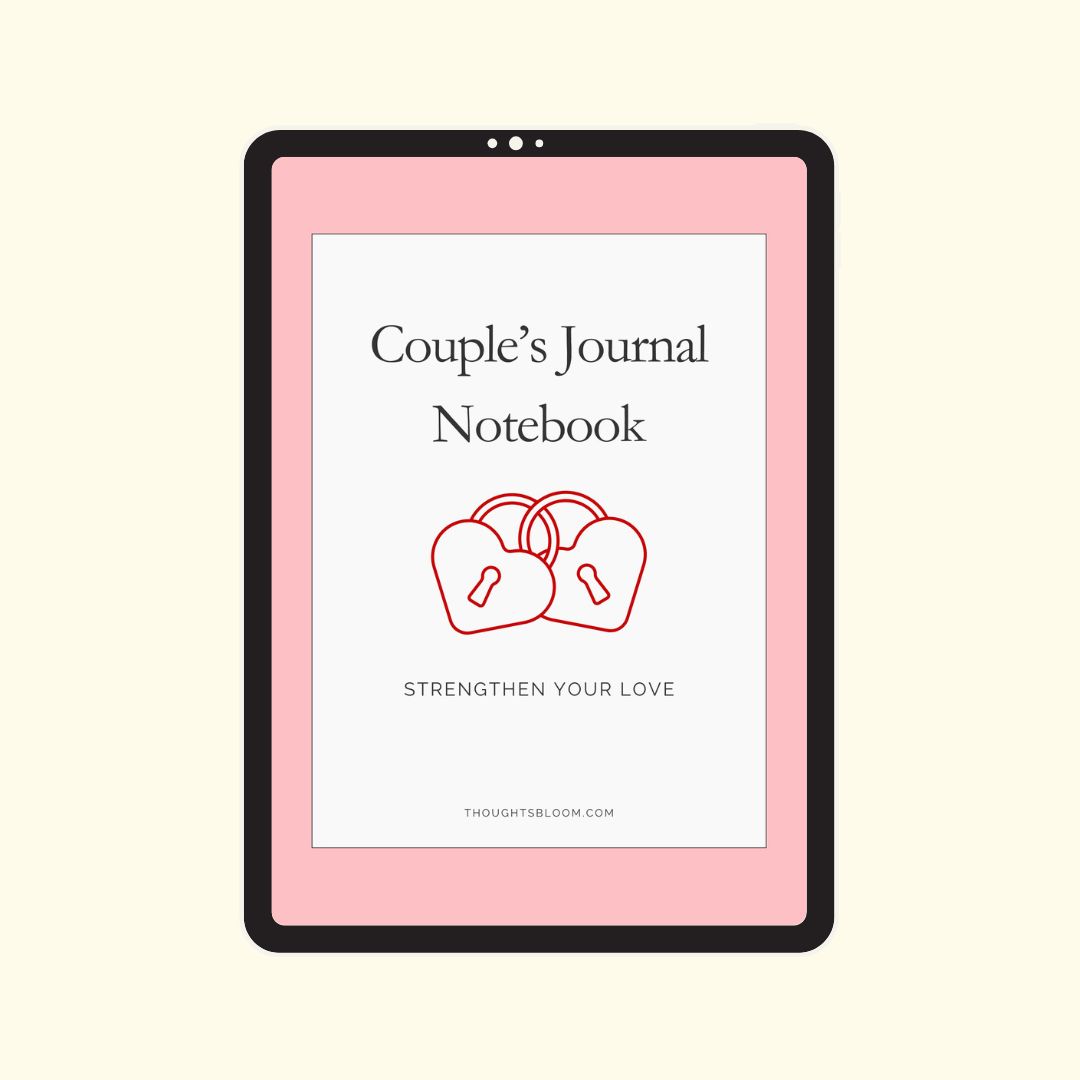
How Well Do You Really Know Each Other?
Find out with this free 100-question couple’s journal notebook designed to spark deeper conversations, uncover things you may not know about each other, and help you reconnect.
The Wrap-Up: How to Stop Jealousy in a Relationship
Jealousy isn’t a sign of a broken relationship, and it isn’t proof of a broken person either. It’s a signal — sometimes pointing toward an old wound that needs attention, sometimes pointing toward a boundary that hasn’t been set clearly enough.
The work isn’t to silence it but to listen closely enough to understand what it’s actually trying to say and to respond with honesty rather than control. That shift alone tends to change not just how jealousy feels but how safe the entire relationship becomes.