Healthy Marriage Checklist: 12 Signs Your Love Life is Thriving

Marriage doesn’t come with an instruction manual, and that gap tends to get filled with worry.
Is this normal? Is this enough? Should things feel easier than they do?
Those questions are common, and they deserve better than a guess — which is exactly what a healthy marriage checklist is for.
A healthy marriage checklist isn’t a scorecard, and it isn’t a test to pass or fail. Think of it more like a mirror — a way to pause, take stock, and notice what’s already working and what might need attention. No marriage will check every box every single day.
Here are twelve signs that tend to show up on a healthy marriage checklist for real, resilient couples — not the highlight-reel version of marriage, but the day-to-day version.
1. Disagreements End in Repair, Not Just Silence
Every couple argues. The presence of conflict says almost nothing about the health of a marriage — the aftermath of conflict is what says everything.
In stronger marriages, disagreements eventually lead somewhere: an apology, a compromise, a moment of humor that breaks the tension, or at least an acknowledgment that both people still matter to each other. Contrast that with conflict that simply fades into cold silence, only to resurface weeks later, unresolved and slightly larger than before.
Check for this: After a disagreement, does reconnection happen within a reasonable window — hours or a day or two — or does resentment tend to pile up quietly in the background?
2. Both Partners Feel Safe Being Fully Known
A healthy marriage tends to function like a container strong enough to hold the messy, unfiltered, less-photogenic parts of a person — insecurities, embarrassing histories, unpopular opinions, bad days.
Feeling safe doesn’t mean never being challenged; it means knowing that vulnerability won’t be weaponized later.
Check for this: Is there anything being hidden purely out of fear of judgment or ridicule, rather than genuine privacy?
3. Individual Identity Hasn’t Disappeared
Here’s a place where popular culture gets it wrong. Total merging — finishing each other’s sentences, sharing every hobby, needing constant togetherness — is often mistaken for the gold standard of closeness.
In reality, healthy marriages tend to protect two separate identities inside one partnership.
While you spend quality time together, like during your couples morning routine or at-home date nights, it’s important to do things such as maintaining friendships outside the marriage, having individual interests, and occasionally doing things on your own. They’re often what keeps the relationship interesting over the long haul.
Check for this: Do both people still have a life, friendships, and interests that exist independently of the relationship?
4. Appreciation Gets Said Out Loud
It’s easy to assume a partner already knows they’re valued.
Assumption is not the same as communication. Healthy marriages tend to have a habit — sometimes small, sometimes daily — of naming what’s appreciated: a well-timed thank-you, a specific compliment, acknowledgment of effort that might otherwise go unnoticed.
You can appreciate your partner in their love language—like showing gratitude through your words or small romantic gestures that mean the world.
Check for this: In the last week, was appreciation expressed out loud, not just felt internally?
5. Money Conversations Happen Without Dread
Finances are one of the most cited sources of marital stress, and for good reason — money conversations often carry hidden weight about control, security, and values.
In stronger marriages, financial discussions may still be uncomfortable at times, but they happen. Transparency about spending habits, individual debts, bill-splitting arrangements, savings account structure, and financial goals tends to replace secrecy or avoidance.
Check for this: Can a conversation about money happen without either partner shutting down, deflecting, or hiding information?
6. Physical and Emotional Intimacy Both Get Attention
Intimacy is often reduced to one dimension, but it actually operates on at least two tracks: physical connection and emotional closeness. Neither one reliably substitutes for the other.
A marriage might have plenty of one and still feel lonely without the other. Healthy marriages tend to keep both in view, checking in on each even when life gets busy or a particular season feels dry.
Check for this: Has either form of intimacy quietly gone unattended for a long stretch without acknowledgment or conversation?
And use these 50 relationship intimacy exercises to ignite love.
7. Boredom Doesn’t Trigger Panic
This one runs against the grain of what gets celebrated online. Long marriages go through flat seasons — stretches that feel routine, low on spark, maybe even a little dull. That’s not automatically a red flag.
It’s often just what long-term partnership looks like between the peaks. What matters more is whether the couple can name the lull without spiraling into “something is deeply wrong here,” and whether either partner is willing to inject a little novelty back in when it’s needed.
You can try a variety of date ideas, ask yourself spicy and flirty questions every now and then, try new things together, and find small ways to become obsessed with each other.
Check for this: Can a quiet, low-excitement season be named honestly, without triggering catastrophic thinking about the relationship’s future?
8. Support Shows Up During Hard Seasons
Life outside the marriage — job loss, illness, grief, a difficult parent, a hard year at work — puts real pressure on a relationship.
Healthy marriages tend to function as a landing pad during those stretches rather than an additional source of stress. That doesn’t mean either partner has to have the perfect words. Often it just means showing up consistently.
Check for this: During the last genuinely hard season, did the marriage feel like backup or like one more thing to manage?
9. Trust Isn’t Something That Requires Constant Verification
Trust is often described in the negative — the absence of infidelity in marriage, the absence of lying.
But it shows up in smaller, everyday ways too: not needing to check a partner’s phone, not needing a play-by-play of every hour spent apart, not assuming the worst by default when plans change.
Check for this: Does trust operate as a baseline assumption, or does it need to be re-earned on a near-daily basis?
10. Decisions Get Made Together, Not Around Each Other
Big decisions — where to live, whether to have children, how to handle aging parents, career moves — tend to go better in healthy marriages when both people are genuinely part of the process, not just informed after the fact.
This doesn’t require perfect agreement on everything. It requires both voices actually being in the room.
Check for this: Are major decisions arrived at together, or does one partner tend to decide and the other tend to adjust?
11. Humor Still Has a Place
It’s easy to underestimate this one, but shared humor tends to be a strong indicator of a marriage’s resilience.
Inside jokes, the ability to laugh at a shared mistake, playful teasing that doesn’t cross into cruelty — these are signs that the relationship hasn’t calcified into pure logistics and obligation.
Check for this: Is there still room for lightness, or has the relationship started to feel purely functional?
12. Growth Is Expected, Not Feared
People change — values shift, priorities evolve, interests come and go. A healthy marriage tends to make room for that evolution rather than expecting a partner to stay frozen as the person they were at the wedding.
This might mean revisiting old agreements, updating expectations, or simply staying curious about who a partner is becoming. Making space for your partner to be better is one of the most important green flags in a relationship.
Check for this: Is there room to bring up a change in perspective or priorities without it being treated as a betrayal of who that partner used to be?
How to Use This Healthy Marriage Checklist Correctly
A quick note before wrapping up: checklists like this one can accidentally become ammunition — a way to tally up a partner’s shortcomings during an argument.
That’s not what this is for.
The more useful move is to sit with it individually first, notice what stands out, and then bring observations into a conversation with curiosity rather than accusation. Something like, “This made me think about how we handle stress together — how do you feel about that one?” tends to open a door. “You fail on three of these” tends to slam one shut.
No marriage checks every box, every week, forever. What matters more is the trend line — whether the relationship is generally moving toward more connection, more honesty, and more repair, even if it takes a winding path to get there.
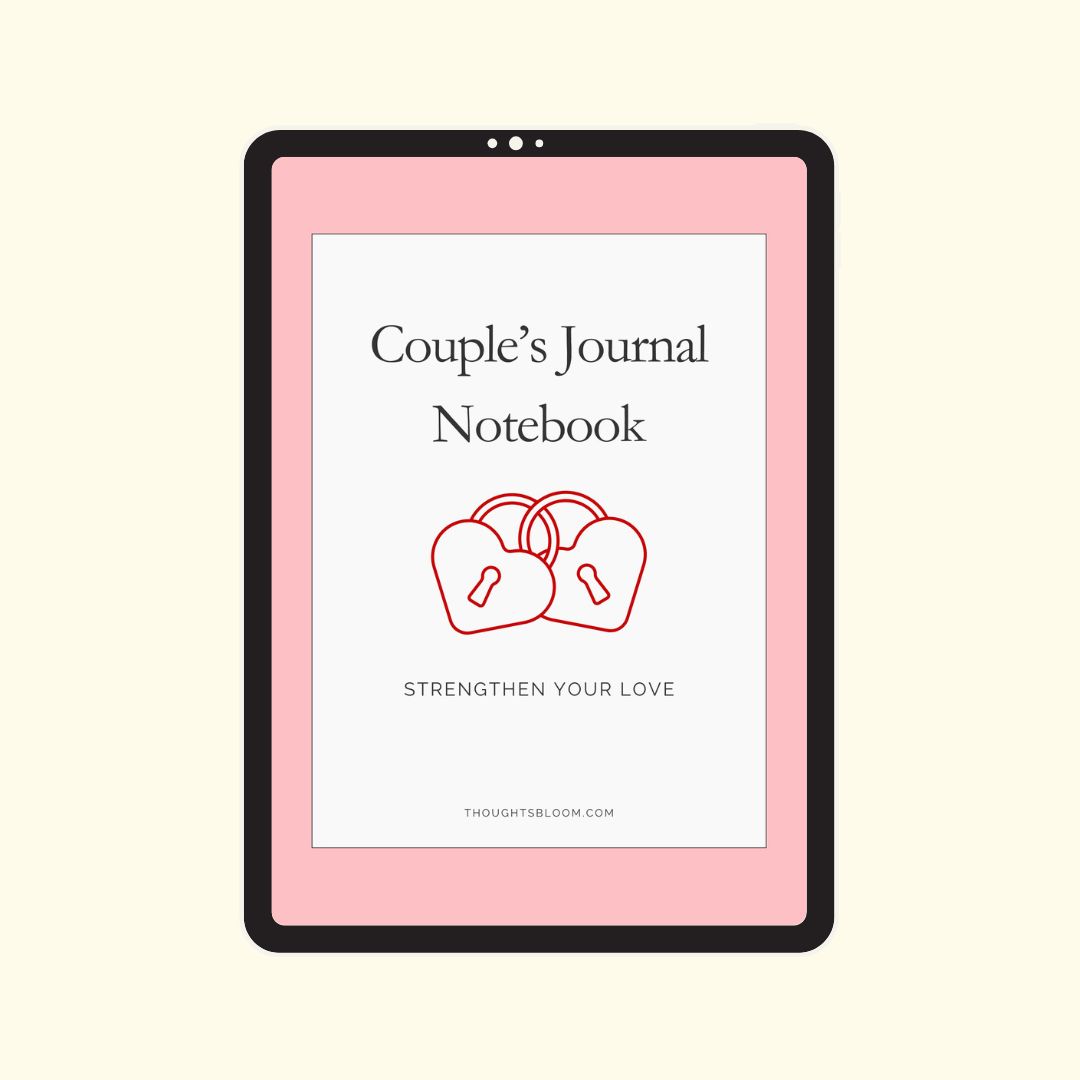
How Well Do You Really Know Each Other?
Find out with this free 100-question couple’s journal notebook designed to spark deeper conversations, uncover things you may not know about each other, and help you reconnect.
Frequently Asked Questions
What is a healthy marriage checklist?
A healthy marriage checklist is a set of observable signs — like trust, repair after conflict, shared appreciation, and healthy independence — that tend to show up in strong, resilient marriages. It’s meant to be used as a reflection tool, not a pass/fail exam.
What are the most important signs of a healthy marriage?
Trust, effective conflict repair, emotional safety, and mutual appreciation tend to matter most. These four healthy marriage signs show up consistently across relationship research and tend to predict long-term stability more reliably than surface-level markers like how often a couple argues or how much time they spend together.
Is it normal for a healthy marriage to go through boring or difficult seasons?
Yes. Flat, low-spark seasons are common even in strong marriages. What matters more than the presence of a lull is whether both partners can name it honestly and reconnect with intention when they’re ready.
How often should couples revisit a healthy marriage checklist?
Every few months tends to work well — often, checking in during natural pause points, like after a hard season, before a big decision, or during a regular relationship check-in, keeps the reflection useful rather than repetitive.
Looking for more helpful healthy relationship checklists?