Marriage Counseling for Infidelity: Can a Relationship Survive Cheating?
Healing after betrayal is possible, but it takes more than forgiveness.
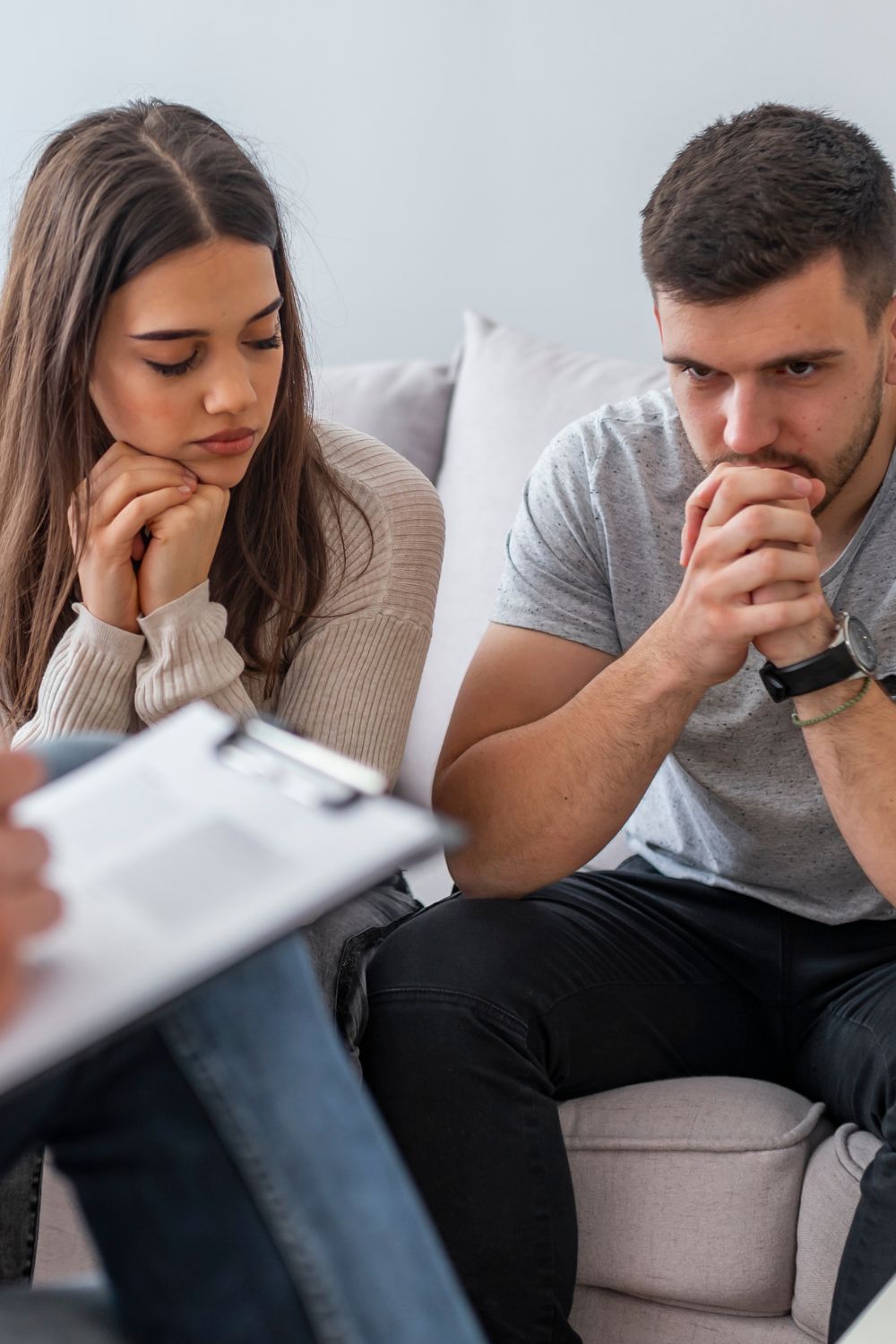
The question arrives in the dead of night, usually. One partner staring at the ceiling, the other pretending to sleep — both wondering the same thing:
Is this the end?
Infidelity is one of the most devastating experiences a marriage can endure. It shatters trust, rewrites the past, and throws the future into terrifying uncertainty. And yet — and this is the part that surprises most people — it does not have to be the end of the story.
Marriage counseling for infidelity is not about excusing what happened. It is not about forcing forgiveness or pretending the wound is smaller than it is.
It is about deciding, with eyes wide open, whether the marriage is worth rebuilding — and if so, how to do it in a way that creates something stronger, more honest, and more intentional than what existed before.
Quick note: Before you decide you need marriage counseling for cheating, you should first know if your partner is cheating on you.
Why Infidelity Happens — And Why It Matters to Understand
Before unpacking what infidelity marriage counseling looks like, it is worth sitting with an uncomfortable truth: affairs rarely happen in a vacuum.
That is not a statement of blame. The betrayed spouse did not cause the affair. Choosing to cheat is always a choice — and it is always wrong. But healing requires going deeper than labeling one person a villain and the other a victim. In the therapy room, the real question is: What was going on in this marriage — and in each person — that made this possible?
Research by relationship expert Dr. Shirley Glass, author of Not Just Friends, found that many affairs begin as emotional friendships that gradually cross into romantic territory. Others are the result of loneliness, unmet emotional needs, sexual dissatisfaction, a midlife identity crisis, or a desperate — if deeply misguided — attempt to feel alive again.
Sometimes, one spouse has been emotionally checked out for years without either partner fully realizing it. Sometimes, poor communication has left both people starving for connection. And sometimes, one person simply made a catastrophic mistake — one that devastated the person they love most.
Understanding the why does not minimize the what. But it is the only path forward that leads somewhere real.
What Is Marriage Counseling for Infidelity?
Infidelity marriage counseling — also called couples therapy for infidelity or betrayal trauma counseling — is a structured, therapist-guided process that helps both partners navigate the aftermath of an affair.
It is not a single conversation. It is not a quick fix. It is a journey, and it is one that requires both people to show up consistently, vulnerably, and honestly.
A skilled therapist who specializes in infidelity will typically guide a couple through several distinct phases:
1. Crisis Stabilization
The initial weeks and months after discovery are often described as a kind of emotional freefall. The betrayed partner may oscillate between rage, grief, numbness, and desperate bargaining. The unfaithful partner may feel paralyzing guilt, shame, or confusion about their own feelings.
The first job of infidelity marriage counseling is to stabilize the immediate crisis. This means helping the couple establish basic safety — emotional safety — so that neither person is making permanent decisions from a place of acute trauma.
This is also the phase where the cheating spouse must make a clear, unambiguous choice: end the affair completely, or end the marriage. There is no version of genuine healing that involves keeping one foot in both worlds.
2. Understanding the Affair
Once some stability is established, the deeper work begins. This phase involves honest, guided conversation about what led to the affair — not to justify it, but to understand it. The betrayed partner often has dozens of questions: When did it start? Did you love them? Did you think about me?
The impulse to shield a partner from painful details is understandable, but secrecy at this stage usually backfires. A therapist helps navigate what level of disclosure is genuinely healing versus what becomes obsessive detail that compounds trauma.
3. Grieving What Was Lost
This is the part of marriage counseling for infidelity that does not get enough attention: both partners are grieving.
The betrayed spouse is grieving the marriage they thought they had, the history they now question, and the sense of safety they have lost. The unfaithful spouse — if they are doing this work honestly — is often grieving too. Grieving the person they thought they were. Grieving the damage they caused to someone they love. Grieving a version of themselves they cannot get back.
Good therapy holds space for both.
4. Rebuilding Trust
Trust does not return because someone says I’m sorry.
It returns through consistent, transparent action over time. This phase of marriage counseling for cheating focuses on concrete behaviors: increased transparency, honest communication about whereabouts and friendships, shared accountability, and — critically — the unfaithful partner learning to sit with their partner’s pain without becoming defensive.
The betrayed partner, for their part, is working on something equally hard: learning to stay present in a relationship while carrying deep fear. This is not the same as forgetting. It is the slow, courageous work of choosing to remain open even when every instinct says to close.
5. Redefining the Marriage
Perhaps the most powerful — and least discussed — phase of marriage counseling for cheating couples is this one: creating something new.
Many couples who survive infidelity describe their post-affair marriage as fundamentally different from what came before. Not because they erased the past, but because they finally addressed the things they had been avoiding for years. The affair became, in a painful and ironic way, the crisis that forced genuine intimacy.
This does not mean affairs are secretly good. They are not. The price of that intimacy is far too high. But it does mean that healing is possible, and that the rebuilt marriage can be deeper, more honest, and more connected than the one that existed before.
What Happens in a Marriage Counseling Session for Infidelity?
Many people walk into their first session of infidelity marriage counseling not knowing what to expect — and often fearing that the therapist will act as a judge, handing down a verdict on who was more wrong.
That is not what good therapy looks like.
A skilled infidelity therapist functions more like a guide than a referee. Sessions typically involve:
- Structured, turn-based communication — so both partners can speak and be heard without conversations collapsing into arguments
- Exploration of each partner’s emotional experience — going beneath the surface to the fear, grief, and longing underneath the anger
- Education about the neuroscience of betrayal trauma — helping the betrayed partner understand why they feel the way they feel (hypervigilance, intrusive thoughts, emotional flashbacks) is not weakness; it is a normal neurological response to a profound threat
- Assignment of exercises between sessions — journaling, structured conversations at home, reading, or individual reflective work
- Individual sessions when necessary — sometimes a therapist will see each partner separately to explore things that are difficult to say in front of the other
The process is demanding. It asks both people to be more honest and more vulnerable than they may ever have been. But it is also, for many couples, profoundly transformative.
Can Marriage Counseling for Cheating Actually Work?
This is the question that sits beneath all the others.
The honest answer is: yes, for many couples — and no, for others. And the difference often comes down to a handful of key factors.
Marriage counseling for infidelity is more likely to succeed when:
- The unfaithful spouse has fully ended the affair and is genuinely remorseful — not just sorry they got caught, but sorry for the harm caused
- Both partners are willing to engage honestly in the process, including the betrayed spouse’s willingness to eventually examine the state of the marriage prior to the affair
- There is still some reservoir of love and genuine desire to save the relationship
- Both people are committed to the process for the long term — not expecting results in two or three sessions
- A qualified therapist with specific expertise in infidelity and betrayal trauma is involved
Marriage counseling is less likely to succeed when:
- The affair is ongoing or the unfaithful spouse refuses to make a clear choice
- One or both partners is attending only to check a box, not out of genuine investment
- There is a pattern of repeated infidelity without meaningful accountability
- Abuse — emotional, verbal, or physical — is present in the relationship
It is also worth naming something that takes courage to say: sometimes, the most loving outcome of infidelity marriage counseling is the realization that the marriage should end. Not every relationship is meant to be saved. A good therapist does not push couples toward either staying or leaving — they help each person and each couple find clarity about what is true and what is right for them.
Individual Therapy Alongside Couples Counseling
One of the most important — and often overlooked — components of healing after infidelity is individual therapy for both partners.
The betrayed spouse may be experiencing symptoms of Post-Traumatic Stress Disorder. Intrusive thoughts, nightmares, hypervigilance, emotional numbness — these are not signs of weakness or instability. They are the mind’s response to a profound betrayal, and they deserve specific, individualized care.
The unfaithful spouse also benefits enormously from individual work. Understanding what drove the affair — whether it was a deeper issue with self-esteem, avoidance, emotional immaturity, or unresolved wounds from childhood — is essential not only for the marriage’s healing, but for that person’s own growth and integrity.
Infidelity marriage counseling works best when it is part of a broader ecosystem of support, not the only lifeline.
How Long Does Infidelity Marriage Counseling Take?
This is one of the most common questions — and one of the hardest to answer, because it depends so much on the specific couple, the nature of the affair, and the level of commitment both people bring.
What research and clinical experience suggest is this: healing from infidelity is not a months-long process. It is typically a years-long one. Most couples working through betrayal trauma are looking at a minimum of one to two years of consistent therapy, with many continuing in some form of ongoing relational work beyond that.
That can feel overwhelming to hear. But here is the reframe: this is not years of suffering. It is years of growth. Couples who stay committed to the process often report that by the end of it, they understand themselves and each other more deeply than they ever imagined possible.
Finding the Right Therapist for Infidelity Marriage Counseling
Not all therapists are equipped to work with infidelity. It requires a specific skill set — the ability to hold both partners’ pain simultaneously, to not take sides, to understand betrayal trauma, and to navigate the complex emotional terrain of an affair without flinching.
When searching for a therapist for infidelity marriage counseling, look for:
- Specific training or experience in affair recovery and betrayal trauma
- Familiarity with frameworks like the Gottman Method, Emotionally Focused Therapy (EFT), or the work of therapists like Esther Perel and Shirley Glass
- A non-judgmental, curious approach — not a moralistic one
- The ability to see and engage with both partners as full human beings
The therapeutic relationship itself matters enormously. If either partner feels judged, dismissed, or unheard by the therapist, it is worth finding someone else. The right therapist makes both people feel safe enough to be radically honest.
A Word to the Betrayed Partner
If the discovery of a partner’s affair has brought someone to this page, please hear this: the pain being experienced right now is real, and it is valid. The ground beneath the relationship has shifted, and nothing about the confusion, grief, or rage is an overreaction.
There is no timeline for healing. There is no “should be over it by now.” What there is, is a choice — not about whether to feel the pain, but about whether to face it with support. Marriage counseling for infidelity is not about being told to forgive on someone else’s schedule. It is about being given the tools to figure out what you actually want, what the relationship actually is, and what kind of future is possible.
That clarity — wherever it leads — is worth fighting for.
A Word to the Unfaithful Partner
If a partner has been unfaithful and is reading this: the fact of being here matters. The willingness to sit with the weight of what was done — rather than minimizing, deflecting, or running — is the first step toward anything better.
What happens next depends enormously on what is done with this moment. Genuine healing requires more than apology. It requires transparency, patience, and a willingness to let a partner’s pain be real without becoming defensive. It requires showing up to counseling sessions even when they are hard. It requires understanding that rebuilding trust is not a two-way project.
But it is possible. People do this. Marriages survive. Some of them become the best versions of themselves on the other side.

How Well Do You Really Know Each Other?
Find out with this free 100-question couple’s journal notebook designed to spark deeper conversations, uncover things you may not know about each other, and help you reconnect.
The Wrap-Up: Marriage Counseling for Cheating Spouses
Infidelity is not the end of a marriage unless both people decide it is. Marriage counseling for cheating is not a guarantee — but it is a real, evidence-supported path toward healing, clarity, and in many cases, genuine renewal.
The road is long. The work is hard. And the reward — a relationship built on honesty rather than illusion — is worth every difficult step.
If infidelity has found its way into a marriage, the most important thing to know is this: the next chapter has not been written yet. And with the right support, it can be a good one.
If you are navigating infidelity in your marriage, speaking with a licensed therapist who specializes in infidelity marriage counseling is the most important step you can take right now. You do not have to figure this out alone.