How to Overcome Dating Anxiety: What You Need to Know
Because, darling, the right connection shouldn’t begin with panic.

Dating is supposed to be exciting. But somewhere between the butterflies and the “what if they don’t like me?” spiral, it can quickly become one of the most nerve-wracking experiences a person goes through.
And this is something many people, who genuinely seek love, go through. Both men and women.
If that sounds familiar, know this: dating anxiety isn’t a personality flaw. It’s not a sign that you’re “too much” or “not cut out for this.” It’s one of the most common, most human experiences there is — and it’s something that can genuinely get better.
This guide won’t throw a list of quick fixes at the problem. Instead, it’s going to go a little deeper — because dating anxiety usually has deeper roots, and it deserves more than a surface-level answer.
Want to overcome dating anxiety? Let’s get started.
What Dating Anxiety Actually Feels Like
Dating anxiety can look like replaying a conversation 47 times after a date.
It can feel like a racing heart before sending a simple “had a great time” text.
It shows up as avoidance — turning down potential connections before they even get started — and in the exhausting habit of over-analyzing every pause, every emoji, every read receipt.
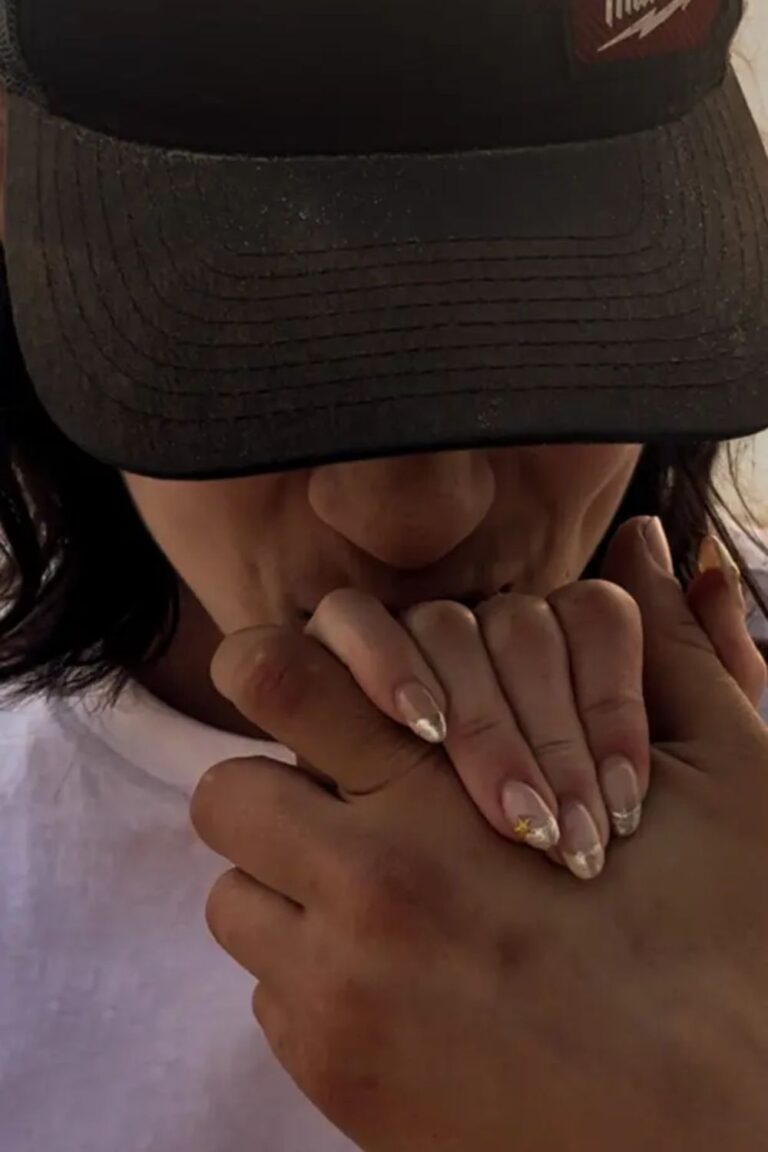
It also shows up physically… tight chest, restless sleep the night before a date, an upset stomach during one.
For people dealing with social anxiety and dating simultaneously, even the idea of small talk with a stranger can feel overwhelming.
These aren’t signs of weakness. They’re signs of a nervous system that has learned to treat vulnerability as a threat.
Where Does Dating Anxiety Really Come From?
Here’s the thing about first date anxiety and the broader fear that wraps around dating — it rarely starts with dating itself.
Fear of rejection in dating is almost always tied to something older. A painful breakup that never quite healed. A childhood where love felt conditional. Long-term insecurity about oneself. A pattern of attachment anxiety that developed quietly over years of relationships where safety wasn’t guaranteed.
Sometimes it’s something as subtle as consistently being the “too much” person, or someone who was chronically overlooked.
Attachment theory gives useful language here: anxious attachment styles often translate directly into hypervigilance in dating. The nervous system, wired to detect abandonment, starts treating a first date like a high-stakes audition rather than a casual human connection.
Understanding the source doesn’t immediately dissolve the anxiety — but it does change the relationship with it. Instead of thinking I’m anxious because I’m broken, the reframe becomes: I’m anxious because I’ve been hurt before, and my mind is trying to protect me. That’s a much kinder, and more accurate, starting point.
Why “Just Relax” Is the Worst Advice
Anyone who has ever been told to “just relax” in a high-anxiety moment knows how utterly useless that phrase is.
Anxiety doesn’t operate on demand. It isn’t a choice. Telling someone with dating anxiety to “just put themselves out there” or “stop overthinking” is the emotional equivalent of telling someone with a broken ankle to simply walk it off.
The goal isn’t to eliminate anxiety entirely — that’s neither realistic nor necessary. The goal is to learn how to move alongside it, to stop letting it make decisions on behalf of authentic connection.
Practical Strategies to Overcome Dating Anxiety
If you’re looking for actionable steps you can take to deal with dating anxiety, here’s a list of four things that work.
1. Reframe What Rejection Really Means
One of the most powerful mindset shifts anyone can make is changing the meaning assigned to rejection.
Culturally, rejection gets treated as a verdict — like, a proof of unworthiness. But compatibility is the actual standard.
When someone isn’t interested, it doesn’t mean the rejected person is defective. It means those two people weren’t the right fit for each other. That’s genuinely neutral information — even when it stings. Every rejection is, in a strange way, a redirect toward someone better suited.
Learning to hold that perspective doesn’t make rejection painless, but it does make it survivable.
2. Slow Down the Timeline
Dating anxiety often thrives on urgency — the pressure to know whether someone is “the one” by the second date, or to decode whether their body language on a Tuesday evening meant something.
That pressure is exhausting, and it’s also self-defeating.
Slowing down means allowing things to unfold without forcing conclusions. It means treating early dating as information-gathering. It means asking: “Am I enjoying this person’s company right now?” rather than “Is this going to work out forever?”
3. Manage the Pre-Date Spiral
The hours before a date can become their own ordeal — the outfit crisis, the mental rehearsals, the catastrophic “what ifs.” A few things help interrupt this loop:
Ground the body first. Anxiety lives in the body before it takes over the mind. A short walk, slow breathing, or even cold water on the wrists can shift the nervous system from threat-mode to present-mode.
Set an intention, not an expectation. Instead of going into a date hoping to impress, try going in with the goal of being genuinely curious about the other person. That tiny shift moves the focus outward, off the internal performance evaluation and onto real connection.
Cap the prep time. Over-preparing for a date is a form of anxiety management that backfires. Decide on an outfit, review a talking point or two — then stop. The rest needs to be improvised, because real connection always is.
4. Show Up as Yourself, Not the Audition Version
Dating anxiety often creates a very specific persona: the perfectly curated, carefully edited version of who someone thinks they need to be in order to be chosen.
The problem? That version is exhausting to maintain, and it attracts people who are falling for a performance, not a genuine connection.
Authenticity is counter-intuitively disarming. Admitting nerves on a first date (“I’m a little nervous, honestly — I always am on first dates”) tends to land with warmth, not judgment. It gives the other person permission to be human too. That’s where actual chemistry begins.
Download the Free Couple’s Journal Notebook
This free printable journal is filled with 100 guided prompts and space to reflect, reconnect, and document your love story—one question, one page, one honest moment at a time.
When Dating Anxiety Becomes Avoidance
There’s an important line between experiencing dating anxiety and letting it make every decision.
If the pattern looks like consistently canceling plans, staying in unfulfilling situationships because they feel “safer” than real vulnerability, or going months without pursuing any connection at all — that’s anxiety in the driver’s seat.
Avoidance feels like relief in the moment, but it quietly reinforces the fear. Each avoided date becomes evidence, to the anxious mind, that dating really is as dangerous as it felt.
If dating anxiety has grown into something that significantly limits life and relationships, working with a therapist — particularly one who practices cognitive behavioral therapy or attachment-based approaches — can be genuinely transformative. There is no shame in that. Some patterns are older and deeper than any self-help strategy can reach alone.
The Wrap-Up: How to Overcome Dating Anxiety for Real
Dating is something people get better at. It’s not a fixed talent some people are born with while others aren’t.
Every awkward date, every misread signal, every moment of vulnerability that didn’t land perfectly — all of it is part of the learning curve. The goal is to keep showing up, learning what kind of connection genuinely feels good.
Anxiety about dating after heartbreak, anxiety about being vulnerable, fear of rejection in dating — these don’t disappear overnight. But they do quiet down. Slowly, with patience and the right support.