Couples Therapy for Long Distance Relationships: What Really Works
Distance tests love, but it doesn’t have to define it.

Let’s talk about couples therapy for long distance relationships.
There’s a particular kind of loneliness that comes with loving someone who lives in a different city, a different time zone, and sometimes a different country altogether.
Long-distance couples know this feeling intimately: the ache of a goodnight call that has to end because one person has work in the morning, the frustration of trying to resolve a disagreement over text when tone gets lost in translation, and the quiet fear that “out of sight” might slowly become “out of touch.”
This is exactly why online couples therapy for long-distance relationships has become such a natural fit rather than a compromise.
For couples separated by geography, therapy conducted through a screen isn’t a lesser version of the “real thing” — it’s often the only version that actually works with the shape of the relationship itself.
And increasingly, long distance relationship counseling delivered virtually is proving just as effective, sometimes more so, than trying to squeeze in-person sessions into two conflicting schedules across two different cities.
Why Long-Distance Couples Face a Different Kind of Strain
Every relationship has friction points, but distance amplifies certain ones in ways that couples living under the same roof rarely experience.
Communication becomes the entire relationship
Without shared physical space, a long-distance couple’s connection is built almost entirely on calls, texts, and video chats. That means every misread tone, every delayed reply, every “we need to talk” text sent hours before an actual conversation can happen, carries more emotional weight than it would for a couple who could just talk it out over dinner.
Trust gets tested by absence, not evidence
Distance creates gaps — literal hours where one partner has no idea what the other is doing — and human imagination tends to fill gaps with worst-case scenarios. Even secure, trusting couples find themselves needing to actively practice trust rather than simply feeling it, because the reassurance of physical presence isn’t there to quiet the mind.
Milestones and routines don’t sync naturally
Couples under one roof build shared rituals almost by accident — morning coffee, Sunday errands, the specific way they argue and make up. Long-distance couples have to build those rituals on purpose, across time zones, often around visits that get planned like small logistical projects rather than spontaneous evenings together.
Reunions carry impossible pressure
The rare in-person visit gets loaded with expectation — it has to be perfect, has to make up for weeks or months apart, has to prove the relationship is “worth it.” That pressure alone can create conflict that has nothing to do with the actual issues between two people.
None of these challenges mean a long-distance relationship is doomed. They simply mean the relationship needs different tools — and this is precisely where online couples therapy for long distance relationships earns its value.
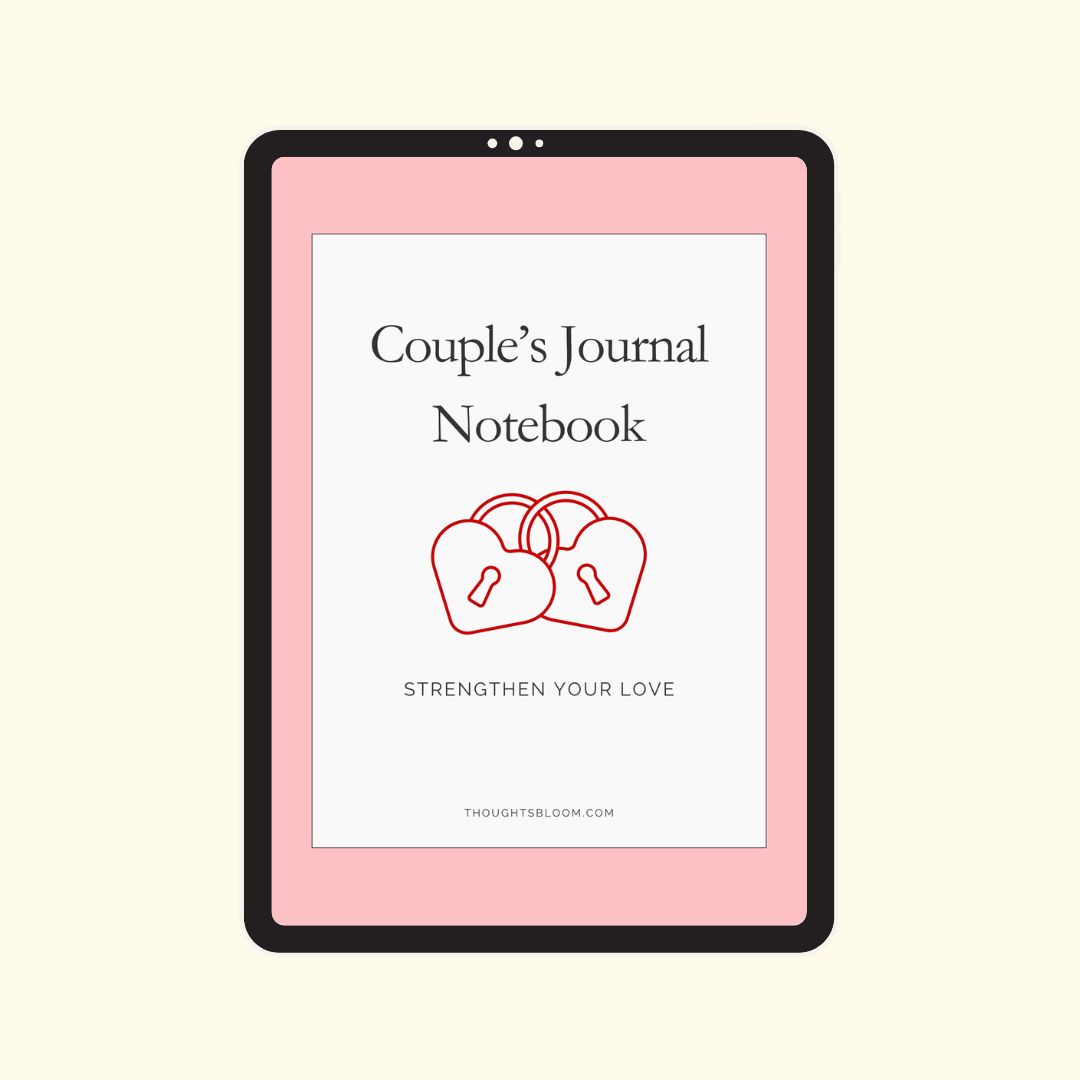
How Well Do You Really Know Each Other?
Find out with this free 100-question couple’s journal notebook designed to spark deeper conversations, uncover things you may not know about each other, and help you reconnect.
Why Online Therapy Fits Long-Distance Couples Better Than In-Person Counseling
It might seem counterintuitive that wouldn’t a couple already living through a screen benefit more from an in-person therapist who can bring them physically together?
In practice, the opposite tends to be true, for a few grounded reasons.
It meets the couple where the relationship already lives
A long-distance relationship exists on video calls, voice notes, and late-night texts. A therapy format that mirrors that reality — video sessions, secure messaging between appointments — doesn’t ask the couple to change their entire communication structure just to get help. It works with what’s already familiar.
No travel coordination required
Flying one partner to meet the other just to sit in a therapist’s office defeats the purpose of getting support quickly. Long distance relationship counseling conducted virtually means both partners can log in from wherever they are — one from a dorm room, one from an apartment three time zones away — without adding another layer of logistics to an already complicated relationship.
Time zones become manageable, not disqualifying
Reputable platforms offering long distance relationship counseling typically allow flexible scheduling, including therapists who work early mornings or late evenings to accommodate a couple split across time zones. This kind of flexibility is far harder to find in a local in-person practice with fixed office hours.
It normalizes talking through a screen
Therapists who specialize in remote or telehealth-based couples work understand a fact that in-person therapists may not have had to grapple with as directly: connection through a screen still counts as real connection
Some research on virtual therapy has noted that therapists who felt less confident about connecting with clients online rated the experience more negatively than those who adapted — and most report those early challenges easing considerably within a few months of consistent practice.
In other words, the format is not the obstacle it might initially seem to be — it simply asks both the couple and the therapist to be intentional about presence in a way physical proximity used to provide automatically.
What Long-Distance Relationship Counseling Actually Helps With
Contrary to the assumption that therapy is only for relationships in crisis, most long-distance couples who seek support are working through very specific, solvable patterns:
Communication style mismatches. One partner processes conflict immediately through a phone call; the other needs hours to think before responding by text. Left unaddressed, this becomes a repeating source of hurt. A therapist can help translate between these styles rather than letting them cause ongoing friction.
Anxiety around trust and reassurance. Distance-related anxiety is common and treatable. Therapy can help distinguish between a genuine red flag and an anxious mind filling in blanks with fear.
Planning a shared future. Many long-distance relationships operate under an unspoken assumption that “eventually” someone will move. Therapy creates space to actually name that plan out loud — timelines, compromises, career considerations — before resentment builds around an assumption that was never actually discussed.
Intimacy across distance. Physical intimacy naturally looks different when partners aren’t in the same place, and couples often need permission and guidance to redefine what closeness means without in-person touch.
Navigating a transition to living together. For couples approaching the end of their long-distance chapter, counseling can help prepare for the surprisingly difficult adjustment of finally sharing space after months or years of independence.
What to Look for in a Platform Built for Long-Distance Couples
Not every online therapy platform is equally suited to the specific needs of geographically separated couples. A few features matter more here than in general couples counseling:
True flexible, time-zone-aware scheduling — not just “online availability,” but therapists actively willing to work around a significant time difference.
Live video as the primary format. Text-based platforms can supplement care, but the emotional nuance long-distance couples are often missing in daily life needs to be practiced in real time, not just written out.
Both partners can join from separate locations. This sounds obvious, but it’s worth confirming — some platforms are built assuming couples will be in the same room together.
Therapists trained specifically in relationship counseling, not general individual therapy, since the dynamics of a long-distance relationship benefit from someone who understands attachment and communication patterns specifically, not just mental health broadly.
Secure messaging between sessions, which lets a partner flag something that came up mid-week rather than carrying it, unresolved, for days until the next appointment.
And with that being said, here are the best online couple therapy platforms to choose from.
The Wrap-Up: Online Couples Therapy for Long-Distance Relationships
Coordinating one more thing across two schedules and two time zones can feel exhausting before it even begins. The good news is that most platforms offering long-distance relationship counseling are built to remove exactly that friction:
A single intake questionnaire, a therapist match within days rather than weeks, and a first session that can happen from two separate couches on two separate continents if that’s what the relationship requires.
Distance already asks a lot of a relationship. It shouldn’t also have to be the reason a couple avoids getting support. Online couples therapy for long distance relationships exists precisely because proximity was never really what made a relationship work in the first place — communication, trust, and consistent effort were.