What Is the Average Cost of a Wedding in 2026?
Love may be priceless, but weddings certainly aren’t.
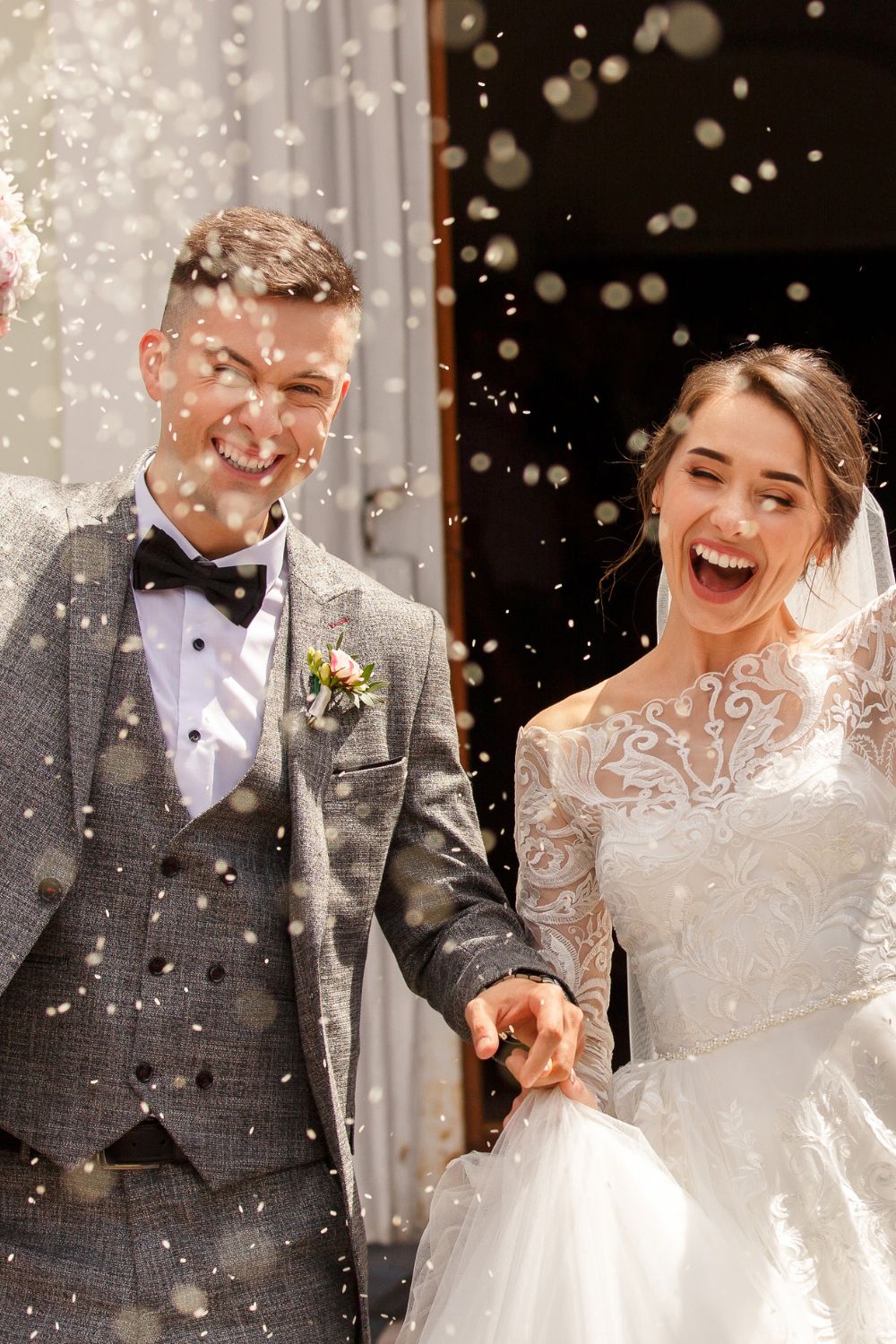
There is a particular kind of silence that falls over a couple the moment the first venue quote lands in their inbox. It is not panic, exactly — more like disbelief mixed with a quiet recalculation of everything they thought they knew about money.
This reaction is universal, and so much of the stress around wedding planning has nothing to do with love, commitment, or readiness for marriage. It has to do with sticker shock, and sticker shock is a solvable problem once the real numbers are on the table.
According to The Knot’s 2026 Real Weddings Study, the average American wedding now costs $34,200, not counting the ring or the honeymoon. That is a striking jump from $28,000 in 2019, and the causes are not mysterious.
Post-pandemic demand for celebration, inflation in food and labor costs, and a cultural shift toward weddings as fully personalized experiences rather than templated events have all contributed to this cost increase.
Averages, though, can be a little misleading — even a little unkind — because they flatten enormous variation into a single number. They erase the couple who threw a beautiful backyard celebration for $9,000 and the couple who booked a downtown hotel ballroom for $95,000.
Understanding where the money goes and why is what turns a frightening number into a workable plan so you can see where there’s real room to make different choices without feeling like you are settling for less.
Why the Guest List Is the Real Budget Lever
Before breaking down the wedding categories, it helps to understand the single biggest driver of total cost: guest count.
Long before anyone chooses a cake flavor, the guest list quietly decides most of the budget. Nearly every per-person cost in a wedding — plates, chairs, favors, bar pours, even the size of the dance floor — scales directly with headcount.
Move from 80 guests to 150, and the total cost does not creep upward; it jumps, often by $15,000 to $20,000, because caterers, rental companies, and venues price almost everything per head.
This is why the most financially consequential conversation in wedding planning rarely happens in a vendor meeting. It happens at the kitchen table, deciding whether Great-Aunt Carol’s second cousins really need to be there. Cutting twenty names from a list is not a small edit; it is often the single biggest budget lever available to save thousands of dollars — money that can go toward a dream photographer, a better band, or simply staying within a comfortable budget.
But guest list conversations are often one of the most emotionally loaded parts of planning. They touch family obligation, old friendships, and fear of hurt feelings. But reframing the guest list as the primary financial lever — rather than a purely emotional negotiation — can make those conversations easier.
It becomes less “who do we cut” and more “what kind of day do we actually want, and who do we really want to celebrate it with?”
The Full Wedding Cost Breakdown, Category by Category
The breakdown below reflects the industry data, adjusted for the categories couples ask about most.
Venue and Rentals: The Anchor Cost
Expect to hand over 30 to 40 percent of the total budget here, typically $8,000 to $25,000.
This is the line item most sensitive to timing: a Saturday in June in a major metro area sits at the top of that range, while a Thursday evening in February can undercut it by half.
Bundled venues — the kind that include tables, chairs, and a built-in caterer — often end up cheaper overall than a beautiful blank-slate barn that requires renting in every single item separately.
Catering and Bar: The Category That Grows With the Guest List
Catering and bar service together usually claim another 20 to 25 percent, or roughly $100 to $200 per guest for a seated dinner with an open bar.
A family-style meal typically runs 15 to 20 percent less than a plated one, partly because it needs less serving staff. One detail couples rarely calculate ahead of time: bar service alone, for 100 guests over five hours, can quietly reach $6,000 to $8,000 — a number that surprises even people who budgeted carefully for food.
Average Cost of a Wedding Photographer
Photography sits at roughly $3,000 to $6,000, usually 8 to 12 percent of the budget, and covers a full day of coverage plus several hundred edited images.
Ask five wedding planners which category to protect if money gets tight, and four will say photography — a wedding disappears into memory within a few years, but the pictures are what remain.
A practical way to manage this cost without cutting corners: newer photographers building a portfolio often charge $1,000 to $1,500 less than established names, and a review of three or four full galleries (not just highlight reels) usually reveals talent long before the price catches up to it.
Average Cost of a Wedding DJ
A wedding DJ typically costs $1,000 to $2,500 for four to six hours of ceremony, cocktail, and reception coverage — a fraction of what a live band charges, which often starts near $3,500 and climbs well past $10,000 for a full ensemble.
The gap in guest experience is smaller than most people assume, particularly when the couple hands over a clear must-play list ahead of time.
DJs also tend to double as the reception’s informal stage manager, cueing entrances and toasts, which is a role a band rarely fills as smoothly.
Average Cost of a Wedding Dress (& Suit)
Wedding attire takes up 3-5% of the wedding budget.
The average wedding dress costs $1,500 to $2,500, with alterations adding another $300 to $800 — a cost that catches almost every first-time bride off guard, since it is rarely included in the sticker price. Add a veil ($100–$300), shoes ($50–$250), and accessories, and the full bridal look lands in that $1,500–$3,500 range.
For the groom, a purchased suit ($300–$800) is often more economical long-term than a rental ($150–$250), simply because it gets worn again.
Average Cost of a Wedding Cake
A tiered wedding cake typically falls in the $400 to $1,000 range, though this can rise quickly with elaborate design work.
A dessert table — cookies, mini pies, a small cutting cake — offers guests more variety at roughly half the cost of a full tiered cake, which is why it has become such a popular substitution in recent years.
Flowers, Stationery, and the Smaller Lines
Floral and decor typically take 5 to 8 percent of the budget ($2,000–$5,000), stationery another 1 to 3 percent, and transportation and officiant fees round out the list at a combined 2 to 4 percent.
None of these break a budget individually, but stacked together with tips, service charges, and a possible planner’s fee, the “miscellaneous” pile often ends up larger than couples expect — commonly 8 to 10 percent of the total.
Factors to Consider When Planning a Wedding
A $30,000 budget is not one plan. It is a set of trade-offs, and three variables do more to shape those trade-offs than anything else: how many people are invited, where the wedding happens, and which single category a couple refuses to compromise on.
Changing any one of these can produce a completely different wedding for the same total spend.
Guest count
Take two couples with identical $30,000 budgets.
The first invites 150 guests. At roughly $150 to $200 per head for food, drink, and rentals alone, that guest list consumes $22,500 to $30,000 before a single flower or photographer is booked — leaving almost nothing for the categories that tend to matter most in hindsight.
The second couple caps the list at 60. The same per-guest math now totals just $9,000 to $12,000, freeing up $18,000 or more for a documentary-style photography and videography package, a live band, and a florist known for elaborate installations.
Same budget, same math per guest — but the guest count alone determines whether that $30,000 gets spent on volume or on depth.
Location
Geography changes the value of every dollar. A couple marrying in a major coastal metro might find that $30,000 barely covers a modest Friday-evening venue and simple catering, with little room for anything else — a $10,000 venue quote in that market buys a fraction of what it would elsewhere.
A couple marrying in a mid-sized inland city can often secure a comparable venue for $5,000 to $6,000, and redirect the difference toward a stronger bar package, upgraded floral design, or a second photographer for the full day.
The wedding itself might look remarkably similar on Instagram. The local market is what decided how far the same $30,000 actually stretched.
Targeted category preference
The final variable is which category a couple simply will not cut, regardless of what it costs elsewhere.
A couple who cares most about the reception experience might spend $8,000 on a live band and full lighting design, then economize hard everywhere else — a simple three-tier cake instead of a designer one, a smaller bridal party, minimal stationery. Their $30,000 buys an unforgettable party with a modest ceremony around it.
A couple who cares most about how the day is documented might cap the band budget at $1,500 for a DJ, skip a florist entirely in favor of greenery from a local market, and put $9,000 toward photography and videography — because for them, the party fades, but the footage does not.
Neither couple is spending “wrongly” or “correctly.” Each is spending in proportion to what they will actually remember caring about five years later.
The lesson underneath all three variables is the same: a wedding budget is not a fixed shape that guest count, location, and preference merely decorate. Those three factors are the shape. Two couples can start with an identical number and end up with two entirely different days, and both can be exactly right.
The Wedding Costs Nobody Warns You About
Even a carefully built budget tends to get ambushed by a familiar set of add-ons that rarely appear on the first quote:
- Service charges and taxes, often 20 to 25 percent tacked onto the catering subtotal — frequently the single biggest gap between an estimated budget and the final invoice.
- Vendor meals, typically $30 to $50 each, required by most venue contracts for the photographer, DJ, and coordinator.
- Overtime fees if the reception runs past its contracted end time, often $200 to $500 per additional hour.
- Gratuities, generally totaling $500 to $1,500 across all vendors.
- Marriage license and officiant fees, usually under $150 combined but almost always forgotten in early planning.
Setting aside a contingency fund of 8 to 10 percent of the total budget from the very beginning absorbs almost all of this without derailing anything else. It is a far more comfortable position than discovering a $3,000 gap two weeks before the wedding.
Budgeting Is Not a Math Problem. It’s a Values Problem.
The most useful thing a couple can do with $34,200 is stop treating it as a benchmark. It is not a score to beat, and spending less than that number does not make a wedding more “responsible,” any more than spending more makes it more meaningful.
What actually predicts how a couple feels about their wedding — during planning and for years afterward — is whether the money went toward things that reflected who they actually are.
That means giving the budget conversation the same honesty as any other conversation in the relationship. What does each partner actually care about seeing, tasting, hearing, wearing on that day? What would they genuinely forget by the following Monday? Those answers, not a national average, are what should shape the number.
And the number on the final invoice is far less important than the story it tells about the two people who chose it.
How Well Do You Really Know Each Other?
Find out with this free 100-question couple’s journal notebook designed to spark deeper conversations, uncover things you may not know about each other, and help you reconnect.
The Wrap-Up: The Average Cost of a Wedding
A wedding budget built around real values will always outperform one built around comparison.
The $34,200 figure is a helpful reference point — a way to see, category by category, where money commonly flows in a modern wedding — but it was never meant to be a finish line. The venue, the catering, the photographer, the DJ, the dress, the cake: every line item is negotiable except one thing, which is what the couple decides genuinely matters to them. Protect those categories without apology. Trim everything else without guilt.
Build in a cushion for the costs no one warns anyone about. And measure the wedding’s success not against a national statistic, but against a simple question: did the day, and the money spent on it, actually feel like the two people who built it?